The Voters Who Aren't There: Inside America's Vast Silent Electorate
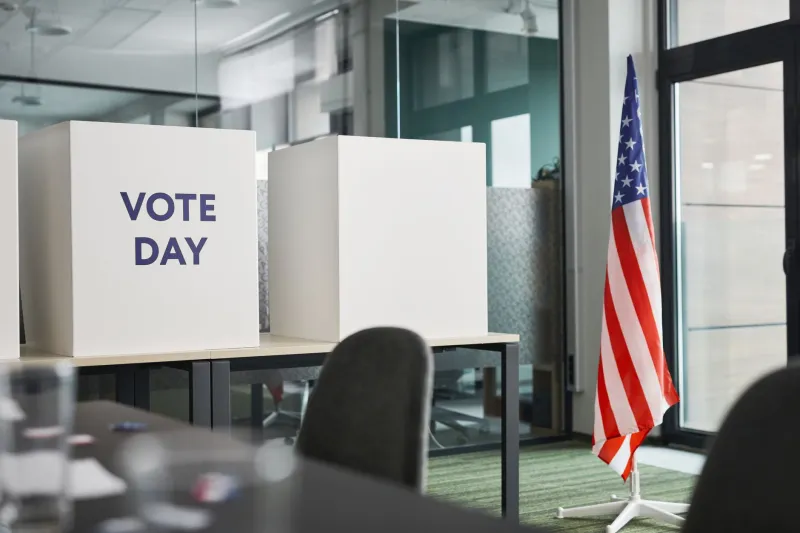
On paper, American democracy has never looked more robust. Voter registration rolls have swelled to historic proportions, with more than 168 million Americans officially enrolled to vote as of the most recent federal election cycle. Yet the distance between that number and the tally of ballots actually cast represents one of the most consequential — and least discussed — structural features of contemporary American politics.
The gap is not marginal. In a typical midterm election, fewer than half of registered voters participate. Even in the most galvanizing presidential contests of recent decades, roughly a third of registered voters stayed home. These are not people who fell through bureaucratic cracks or lack legal standing. They are enrolled, eligible, and absent — a phantom electorate whose silence shapes outcomes just as surely as the votes that are counted.
The Architecture of Absence
Who are these non-participating registrants? The answer resists easy generalization, which is precisely what makes them so strategically complex for campaigns to navigate. They skew younger — voters between 18 and 34 consistently show the largest gap between registration and turnout. They are disproportionately concentrated in urban cores and rural peripheries, the geographic bookends of American political geography. They are more likely to be renters than homeowners, more likely to work in service industries, and more likely to report that they feel their vote does not materially change anything.
That last point deserves particular attention. Survey research conducted after major elections consistently finds that a significant share of registered non-voters do not cite logistical barriers as their primary reason for abstaining. They cite disillusionment. Not apathy in the passive sense, but a considered — if sometimes inchoate — judgment that the political system as currently constituted does not operate in their interest. This is a meaningful distinction, and one that campaign operatives understand better than most political commentators acknowledge.
The Campaign Science of the Unreachable Voter
Modern political campaigns spend enormous resources trying to solve the non-voter problem — or, depending on their strategic calculus, trying to ensure their opponents cannot solve it first. Data firms that supply campaigns with voter files have developed increasingly granular models for predicting which registered non-voters are genuinely persuadable to participate and which represent a permanent abstention.
The terminology inside these operations is revealing. Consultants speak of "low-propensity voters" and assign them numerical scores indicating their likelihood of turning out under specific mobilization conditions. A registered Democrat in a Milwaukee suburb who voted in 2020 but not in 2022 occupies a very different category than a registered independent in rural Nevada who has not cast a ballot in four consecutive cycles. Each requires a different investment, a different message, and a different calculation about whether the return justifies the expenditure.
For campaigns operating on finite budgets, the cold logic often dictates abandoning the deepest layers of the phantom electorate entirely. Resources flow toward "high-propensity" voters — those with established participation histories — even though the theoretical upside of mobilizing non-voters is far greater. This is one of the less-examined feedback loops in American electoral politics: the very people whose engagement could most dramatically alter outcomes are the least likely to receive the organizing attention that might produce it.
A Feature, Not a Bug?
There is a more uncomfortable question lurking beneath the demographic data and campaign strategy memos: whether the persistence of mass non-participation reflects structural design rather than incidental failure.
The United States remains one of the few advanced democracies that places the burden of voter registration on the individual rather than the state. Automatic voter registration, now in place in more than 20 states and the District of Columbia, has demonstrably increased both roll sizes and turnout rates. But it has not been universally adopted, and in several states, legislative resistance to expanding registration access has been sustained and deliberate.
The timing and administration of elections compounds the structural barriers. The United States holds most of its elections on Tuesdays — a legacy of 19th-century agricultural calendars — rather than on weekends or designated public holidays, as many peer democracies do. Early voting windows, mail ballot access, and same-day registration vary dramatically by state, creating a patchwork of participation conditions that predictably advantages some communities over others.
Critics of reform efforts argue that these arrangements reflect legitimate state-level policy choices rather than suppression. Proponents counter that the consistent demographic profile of those most burdened by restrictive election administration — lower-income, younger, and more racially diverse voters — suggests that the status quo benefits incumbents and established political coalitions in ways that have little to do with neutral administrative preference.
The Generational Fault Line
No dimension of the phantom electorate is more politically freighted than its generational composition. Millennials and Generation Z now constitute the largest share of the eligible voting population in American history, yet their aggregate turnout rates continue to lag those of Baby Boomers and the Silent Generation by significant margins.
This gap carries compounding consequences. Because older voters participate at higher rates, elected officials across both parties calibrate policy platforms — particularly on Social Security, Medicare, housing, and long-term fiscal commitments — toward their demonstrated preferences. Younger voters who feel underrepresented by the policy agenda have less incentive to participate, which perpetuates their underrepresentation, which perpetuates the policy misalignment. It is a self-reinforcing cycle, and breaking it requires interventions at multiple levels simultaneously.
Some political analysts argue that recent cycles have shown early signs of this dynamic shifting. Youth turnout in 2018 and 2020 reached levels not seen in decades, driven in part by intense mobilization around issues including climate policy, student debt, and democratic norms. Whether those patterns represent a durable realignment or a temporary response to exceptional political circumstances remains an open and genuinely contested empirical question.
What the Silence Costs
The phantom electorate is not a passive phenomenon. Its existence actively structures the incentives of every candidate and every party operating in the American system. When campaigns conclude that mobilizing non-voters is too expensive or too uncertain, they make a rational choice within the constraints they face — but that choice, aggregated across thousands of races and decades of elections, produces a political system systematically calibrated toward those who already participate.
The result is a democracy that functions, but functions for a narrower slice of the population than its enrollment numbers suggest. The 168 million registered voters are a real constituency in a legal sense. But the roughly 50 to 80 million of them who consistently abstain represent an enormous reservoir of political potential that the current system has largely failed to activate — or in some cases, has actively discouraged from activating.
Whether that failure is a correctable design flaw or a durable feature of American democratic culture is a question without a comfortable answer. What is clear is that any honest accounting of political power in this country has to reckon with the voters who are registered, eligible, and absent — and with the choices, by both individuals and institutions, that keep them that way.