One Nation, Incompatible Realities: How Place Is Becoming the Defining Force in American Politics
When a senator from Ohio stands before a microphone and promises to protect American manufacturing jobs, she is speaking simultaneously to a laid-off steelworker in Youngstown, a logistics entrepreneur in a Columbus exurb, and a graduate student in Cleveland who has never set foot inside a factory. The words are identical. The political meaning, filtered through radically different lived geographies, is not.
This is the central paradox fracturing contemporary American electoral strategy. The country has always been diverse, but the nature of that diversity has shifted. It is no longer primarily a story of race, religion, or class in isolation. Increasingly, it is a story of place — of how the physical and demographic texture of where Americans live is generating political worldviews so distinct that a single policy platform struggles to speak coherently to all of them at once.
The Three Americas That Campaigns Can't Reconcile
Political geographers and campaign strategists have long acknowledged the urban-rural divide. But that binary is now an oversimplification. The more accurate picture involves at least three distinct political ecosystems, each with its own economic pressures, infrastructure realities, and cultural reference points.
The dense urban core — think Chicago's North Side, inner Houston, or downtown Atlanta — is defined by high costs of living, transit dependency, and a service-sector economy. Housing affordability is existential. Climate policy registers as a quality-of-life issue. Healthcare means access to specialists and mental health services, not whether there is a hospital within fifty miles.
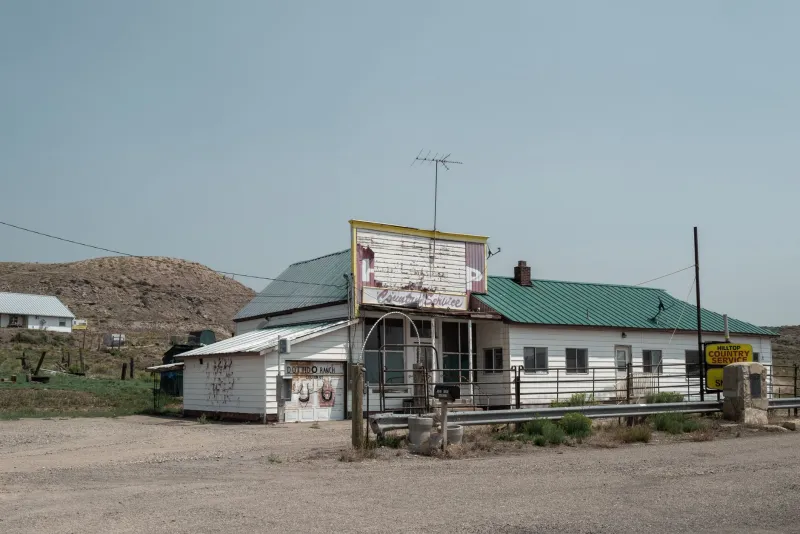
The declining industrial city — Scranton, Gary, Flint, Erie — occupies a different universe entirely. Here, the dominant political emotion is not aspiration but grievance, rooted in decades of deindustrialization that neither party has adequately addressed. Energy policy is not an abstraction; it is a direct conversation about whether the remaining local employer survives the next decade. Healthcare means whether the regional hospital closes its maternity ward.
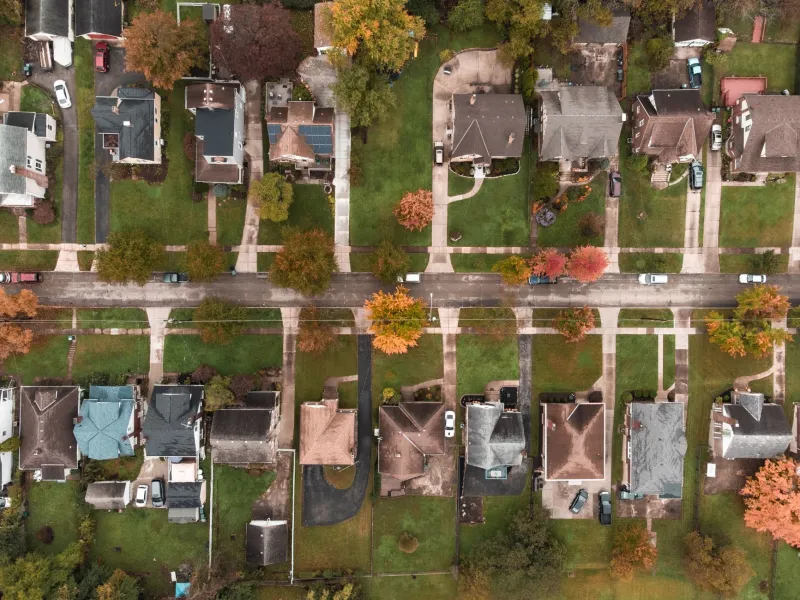
Then there is the sprawling exurb — the fastest-growing political terrain in America. Places like Forsyth County outside Atlanta, Williamson County outside Nashville, or the outer ring of Phoenix. These communities are neither rural nor suburban in the traditional sense. They are car-dependent, economically anxious despite surface-level prosperity, and intensely focused on issues of local control: zoning, school curriculum, and the pace of demographic change in neighborhoods that were farmland fifteen years ago.
These three zones do not merely have different policy priorities. They have different definitions of the same words.
When the Same Word Means Three Different Things
Consider the word "infrastructure." In a dense urban core, infrastructure is a subway line or a fiber-optic broadband network. In a declining industrial city, it is a crumbling bridge or a contaminated water system that has been on a federal repair list since the Obama administration. In an exurb, infrastructure is the four-lane highway that hasn't been widened to accommodate the ten thousand new homes built in the last three years.
Or consider "housing affordability" — arguably the most potent domestic issue of this political moment. Urban progressives frame it as a zoning and supply problem, demanding that cities permit denser construction. Exurban voters hear that argument as a direct threat to the low-density character of the communities they chose precisely to escape urban density. Rural voters, meanwhile, are watching young people leave not because housing is too expensive but because there are no jobs to pay for it regardless of price.
A candidate who threads all three audiences simultaneously on housing has not yet emerged at the national level, because the political logic of each constituency actively undermines the others.
The Demographic Density Multiplier
What makes this geographic sorting more volatile than in previous eras is that it now maps almost perfectly onto demographic change — and onto generational identity.
Younger Americans, particularly Millennials and the leading edge of Gen Z, are disproportionately concentrated in urban cores and inner-ring suburbs. They came of age during the 2008 financial crisis, graduated into a gig economy, and are renting into their thirties in cities where their parents bought homes at twenty-six. Their political priorities — student debt, climate, housing supply, healthcare coverage — are shaped directly by the urban geography they inhabit.
Older voters, particularly those in the exurban and rural zones, experienced a different America. Many own homes that have appreciated dramatically, providing a financial cushion that colors their view of economic policy. They are more likely to be skeptical of federal intervention in local land use, more likely to view energy transition as a cost rather than an opportunity, and more likely to feel that national media and political institutions no longer speak to their circumstances.
This is not simply a values disagreement. It is a disagreement rooted in the material conditions that different geographies impose on the people who live within them.
The Strategic Trap Both Parties Have Walked Into
Republicans, since 2016, have largely bet on the exurban and rural coalition — a strategy that has delivered consistent performance in the Senate and in state legislatures, where geographic representation amplifies lower-density areas. The liability is that it has accelerated the party's estrangement from the fastest-growing urban and inner-suburban populations, including college-educated voters who once formed a reliable Republican constituency.
Democrats face the mirror-image problem. The party's messaging infrastructure — its media relationships, its donor class, its intellectual apparatus — is overwhelmingly concentrated in dense urban centers. Policies designed for urban America, from transit investment to zoning reform to certain climate mandates, can land as culturally alien or economically threatening in the industrial cities and exurbs that Democrats need to remain competitive in Senate races and the Electoral College.
The 2024 electoral map illustrated this tension with unusual clarity. Democrats ran up historic margins in major metropolitan areas while losing ground in the small cities and working-class suburbs that once formed the backbone of the New Deal coalition. The geography of the win column and the geography of the loss column told a story about a party that has become fluent in one America while growing less conversant in the others.
Governing Across the Divide
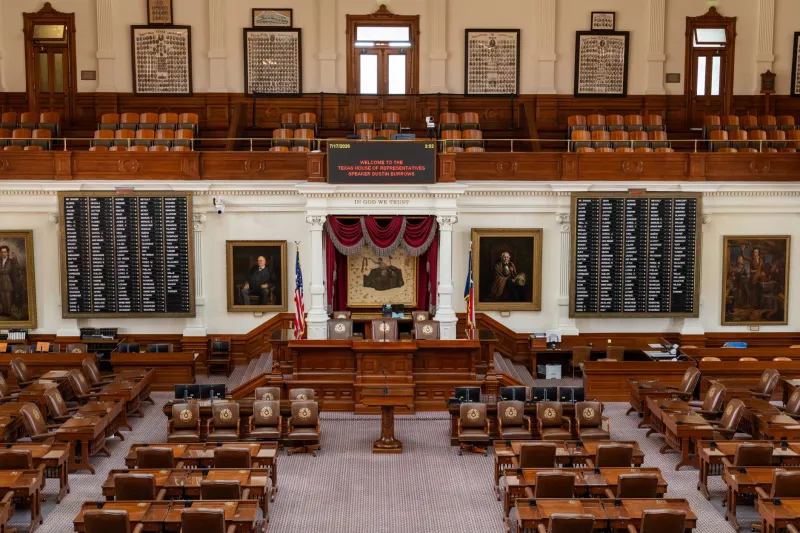
The deeper problem is not electoral but governmental. When a Congress or an administration attempts to write a single national policy on healthcare, energy, or housing, it is attempting to legislate across three fundamentally different economic and physical realities. The result is frequently legislation that satisfies no constituency fully — too urban for the exurbs, too rural for the cities, too timid for either.
Some analysts argue that the structural solution is a more robust federalism: allowing states and regions to design policy frameworks calibrated to their specific geographic realities, with Washington setting floors rather than uniform standards. Others contend that such an approach would entrench inequality, allowing wealthy exurban communities to opt out of regional obligations while declining industrial cities lack the fiscal capacity to fill the federal gap.
Neither answer is politically simple. Both require acknowledging something that national campaigns are structurally incentivized to avoid: that the America a candidate is promising to govern is not one country in any operationally meaningful sense, but a collection of places with diverging interests that are growing harder, not easier, to hold together under a single political roof.
Geography, it turns out, does not just shape elections. It is quietly rewriting the terms on which American self-governance is possible.