Empty Acres, Outsized Votes: How Rural Depopulation Is Distorting American Democracy
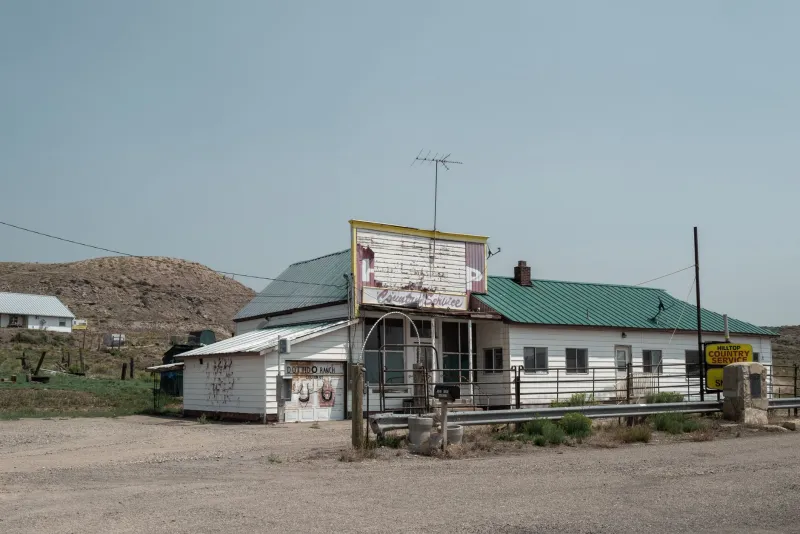
In 2023, the Census Bureau confirmed what demographers had been tracking for decades: the United States is undergoing one of the most significant internal migrations in its modern history. Younger Americans are leaving small towns and agricultural counties at rates not seen since the post-World War II industrial boom. They are heading to metros, to Sun Belt suburbs, to college corridors. What they leave behind is not simply quieter main streets and shuttered diners. They leave behind a political structure that was never engineered to absorb this kind of population asymmetry—and that is now producing consequences the founders almost certainly did not anticipate.
The arithmetic is stark. Wyoming, the least populous state in the union, sends two senators to Washington. California, home to nearly forty million residents, sends the same number. That ratio—roughly one senator per 290,000 Wyomingites versus one per twenty million Californians—was always a feature of the constitutional compact, not a flaw. The Senate was designed to protect smaller states from being steamrolled by larger ones. But that design assumed a relatively stable distribution of population across the states. What it did not account for was a scenario in which rural counties would lose a quarter of their residents in a single generation while coastal and Sun Belt metros absorbed millions of new arrivals.
The Senate's Shrinking Constituency
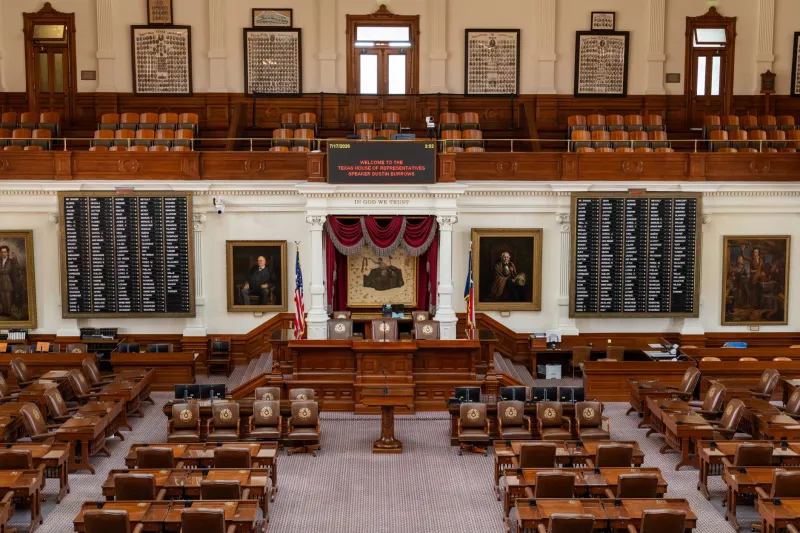
The consequences for legislative representation are not theoretical. When a state like West Virginia loses working-age residents to Ohio, Pennsylvania, and beyond, its two Senate seats do not shrink proportionally. The state retains its full institutional weight in the upper chamber regardless of how many people remain to be governed. This means that legislation affecting land use, agricultural subsidies, energy permitting, and rural infrastructure is increasingly shaped by senators whose constituents represent a smaller and smaller fraction of the national population—yet whose votes carry identical weight to those representing dense urban states.
This is not an argument that rural Americans deserve less representation. It is an observation that the existing system was calibrated for a demographic reality that no longer exists, and that the gap between population and power is widening in ways that affect policy outcomes in concrete terms. Farm bill negotiations, broadband funding formulas, and rural hospital financing all move through a Senate where depopulating states retain structural leverage that their shrinking tax bases and workforce numbers would not otherwise support.
Electoral College Math in a Depopulating Landscape
The Electoral College compounds the distortion. Because every state receives a minimum of three electoral votes regardless of population—two for its senators, one for its single House seat—low-population states command a higher ratio of electoral votes per resident than larger states. As rural states continue to lose residents, that minimum floor becomes an increasingly generous subsidy of political attention.
Presidential campaigns understand this calculus intimately. The modern campaign is not a national conversation; it is a targeted investment in a handful of competitive states where marginal vote shifts produce outsized electoral returns. Rural states that are reliably partisan in one direction receive almost no direct candidate attention, regardless of their institutional weight. But the Electoral College's small-state bonus still shapes the geographic imagination of campaigns—influencing which policy commitments candidates make, which industries they choose to champion, and which constituencies they speak to in the closing weeks of a race.
What demographers are now tracking is whether continued rural depopulation will eventually tip certain states out of their historical partisan alignments, creating new Electoral College battlegrounds in places that have not seen serious presidential competition in a generation. Rural Iowa, once a reliable swing-state bellwether, has moved sharply in one ideological direction as its college-educated population concentrates in Des Moines and its rural counties age and shrink. Similar patterns are visible in parts of Ohio, Michigan, and Wisconsin.
The Feedback Loop Nobody Is Solving
There is a feedback loop embedded in this dynamic that receives far less attention than it deserves. Rural counties that lose population also lose federal funding tied to population-based formulas. Medicaid reimbursements, transportation allocations, and education grants all flow through mechanisms that reward population density. As rural areas shrink, they receive fewer of these resources—which accelerates the conditions that drive young people to leave in the first place. Fewer jobs, fewer services, fewer amenities. More departures. Smaller census counts. Less formula funding.
The political response to this loop has been, at best, inconsistent. Representatives from rural districts have pursued earmarks and targeted appropriations to compensate for what formula funding no longer delivers. But earmarks require political leverage, and political leverage requires winning elections, and winning elections requires turnout—which is increasingly difficult to generate in counties where the median age is climbing and the population of first-time voters is a fraction of what it was twenty years ago.
Some policy analysts have proposed recalibrating federal funding formulas to account for geographic need rather than raw population counts. The argument is straightforward: a rural county with three thousand residents still requires a functioning road network, a hospital within reasonable driving distance, and a broadband connection capable of supporting remote work. The cost of providing those services does not scale neatly with population. But any revision to funding formulas touches the interests of metropolitan areas that benefit from the current population-weighted system, making legislative consensus extraordinarily difficult to achieve.
What Disproportionate Power Actually Produces
The more provocative question is what happens to democratic legitimacy when a declining population retains institutional power that a growing population cannot match. American political culture has always been animated by a tension between majoritarian impulses and countermajoritarian protections. The Senate, the Electoral College, and the amendment process were all designed to ensure that sheer numerical dominance could not entirely override minority interests.
But there is a difference between protecting a minority from being silenced and allowing a shrinking demographic to exercise structural veto power over a growing one. As rural America's share of the national population falls below fifteen percent in some projections, the question of whether that minority's institutional advantages remain democratically defensible will become harder to avoid in mainstream political discourse.
Generational politics sharpens the tension further. The residents most likely to remain in depopulating rural counties are older, less formally educated, and more likely to hold conservative political views than the younger cohorts who have departed for metropolitan areas. This means the demographic collapse of rural America is not simply a geographic story—it is a generational one. The institutional power that small-state senators wield is increasingly the power of an older, declining cohort over a younger, growing one.
The Rules Were Written for a Different Country
None of this resolves easily. The constitutional provisions that create Senate equality among states cannot be amended without the unanimous consent of all states—a threshold that makes formal structural reform essentially impossible in any realistic political scenario. The Electoral College has survived multiple reform efforts and shows no signs of being dismantled through the constitutional amendment process.
What is more likely is that the tension between demographic reality and institutional structure will continue to produce the kind of polarization and mutual distrust that already defines American political life. Urban voters who feel their numerical majority is systematically discounted will grow more resentful of institutions they experience as rigged. Rural voters who feel economically abandoned and culturally dismissed will cling more tightly to the constitutional leverage that remains available to them.
The geography of American politics is not changing because of ideology. It is changing because of economics, demographics, and the slow arithmetic of generational movement. The rules, however, were written for a country that no longer quite exists. That mismatch is not an abstraction. It is the operating condition of American democracy right now.