Fifty Engines of Power: How State Legislatures Became the True Architects of American Life
The Theater of Washington and the Work Happening Elsewhere
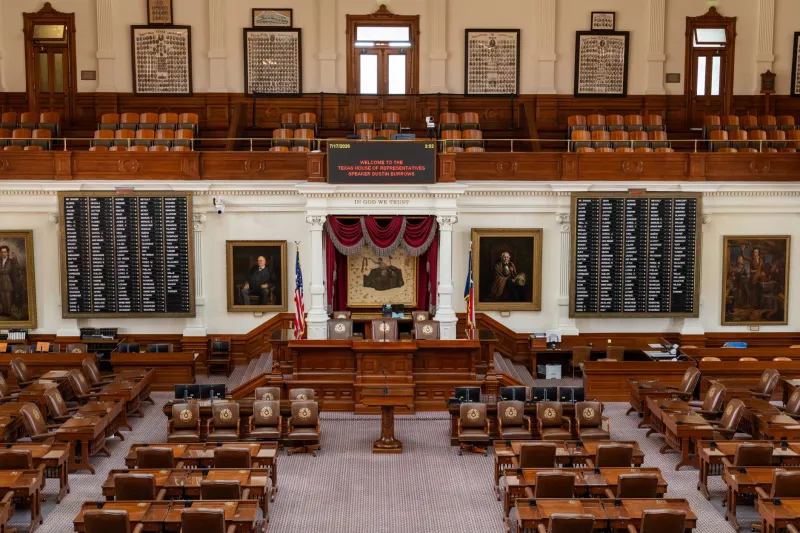
There is a particular ritual to American political coverage. A bill stalls in the Senate. A committee hearing devolves into partisan theater. A press conference is called. Cable news fills four hours with commentary, and nothing changes. Meanwhile, in Columbus and Austin and Sacramento and Tallahassee, legislators are doing something Washington has largely forgotten how to do: governing.
The devolution of practical political power to state legislatures is not a recent accident. It has been building for decades, accelerated by congressional dysfunction, Supreme Court rulings that returned authority to the states, and a coordinated effort by ideological networks on both the left and the right to treat state capitols as the primary arena for policy ambition. What is new is the scale of the consequences—and the degree to which national media has failed to reckon with them.
If you are an American under forty, the laws that shape your economic circumstances, your access to healthcare, your reproductive rights, your housing costs, and the curriculum your children encounter in school were almost certainly written not in Washington but in your state capitol. Congress, for all its symbolic weight, has become a largely ceremonial institution for vast swaths of domestic policy. The real architecture of American life is being constructed fifty different ways, in fifty different rooms, with almost no national audience watching.
The Policy Gap Between Symbol and Substance
Consider the landscape of healthcare. Despite years of congressional debate over the Affordable Care Act, Medicaid expansion, and drug pricing, it is state legislatures that have made the most consequential decisions about who receives coverage and under what conditions. Thirty-nine states have expanded Medicaid under federal law; eleven have not. That single legislative choice—made in state houses, not in the Capitol—determines whether millions of low-income Americans have health insurance. No amount of Senate floor speeches changes that arithmetic.
Housing tells a similar story. The American housing crisis is, at its root, a crisis of local and state land-use policy. Zoning codes, permitting requirements, density restrictions, and tenant protection laws are all creatures of state and municipal legislation. When a young professional in Minneapolis finds that she can afford an apartment that her counterpart in San Jose cannot, the explanation is not federal monetary policy. It is a Minnesota state legislature that chose to preempt exclusionary zoning laws, and a California legislature that, despite years of effort, struggled to do the same.
Criminal justice reform has followed an identical pattern. While federal sentencing guidelines attract occasional congressional attention, the daily reality of American incarceration is governed by state statutes. Mandatory minimum sentences, cash bail systems, parole eligibility, and police accountability standards are all determined at the state level. Between 2019 and 2023, more substantive criminal justice legislation passed through state legislatures than through Congress across the preceding two decades combined.
The Infrastructure of Influence Nobody Covers
How did this happen? Part of the answer lies in the deliberate investment made by ideological organizations in state-level politics. Groups like the American Legislative Exchange Council on the right, and the State Innovation Exchange on the left, have spent years cultivating relationships with state legislators, drafting model legislation, and building networks that allow a successful policy experiment in one state to be rapidly replicated in dozens of others. This is infrastructure. It is patient, methodical, and almost entirely invisible to the national political press.
The result is a kind of policy velocity that Washington cannot match. When a red-state legislature wants to restructure its education funding formula, restrict gender-affirming medical care, or overhaul its election administration laws, it can move from bill introduction to governor's signature in a matter of weeks. When a blue-state legislature decides to mandate paid family leave, establish a public option for health insurance, or enact sweeping climate regulations, the same compressed timeline applies. Congress, by contrast, can spend years failing to pass legislation that commands majority public support.
The generational dimension of this shift is particularly significant. Younger Americans—those who came of political age after the 2008 financial crisis and the subsequent decade of congressional paralysis—have largely internalized the irrelevance of federal legislation to their immediate circumstances. Polling consistently shows that Gen Z and younger Millennials are more likely than older cohorts to know the name of their state attorney general than their U.S. senator. That is not political ignorance. It is a rational response to where power actually lives.
The Democratic Deficit at the State Level
None of this would be cause for alarm if state legislatures were robustly accountable to the populations they govern. They are frequently not. Voter turnout in state legislative elections is, on average, dramatically lower than in federal contests. Legislative maps in many states are drawn by the very legislators whose political survival depends on those maps. Redistricting processes that produce safe seats insulate incumbents from electoral consequences and reward ideological purity over practical governance.
The result is a democratic gap that runs in both directions. In states where legislative majorities are insulated from competitive elections, policy outcomes can diverge sharply from majority public opinion. A state legislature can enact a near-total abortion ban in a state where a majority of residents support abortion access, because the electoral mechanisms that might correct that misalignment have been systematically weakened. The same dynamic operates in blue states, where progressive supermajorities sometimes pursue policies that face significant opposition from constituencies—rural, working-class, immigrant—who lack the political organization to register effective dissent.
Reorienting the American Political Imagination
The practical implication for citizens who want to understand how their lives are actually governed is uncomfortable but clear: the national political conversation is, in large measure, a distraction. Presidential elections matter enormously for foreign policy, federal appointments, and regulatory direction. But the texture of daily American life—the cost of housing, the availability of healthcare, the content of school curricula, the conditions of incarceration, the structure of the labor market—is determined primarily by the people who meet in state capitols, often in session for only a few months each year, covered by a shrinking corps of statehouse journalists, and accountable to electorates that rarely exceed fifty percent turnout.
This is the 21st-century American state in its actual form: not a unified national government projecting coherent policy from Washington, but a federation of fifty distinct political economies, each building its own version of the social contract, often in explicit competition or contradiction with its neighbors. For a generation of Americans who have grown up watching Congress fail to act on climate change, gun violence, housing costs, and healthcare access, the state legislature is not a consolation prize. It is the main event.
The question is whether the national political culture—its media, its donors, its activist infrastructure, its engaged citizens—will reorganize itself around that reality before another decade of congressional theater consumes the attention that could otherwise be directed at the rooms where decisions are actually being made.