Petition, Vote, Remove: The Recall Election's Unlikely Renaissance in American Democracy
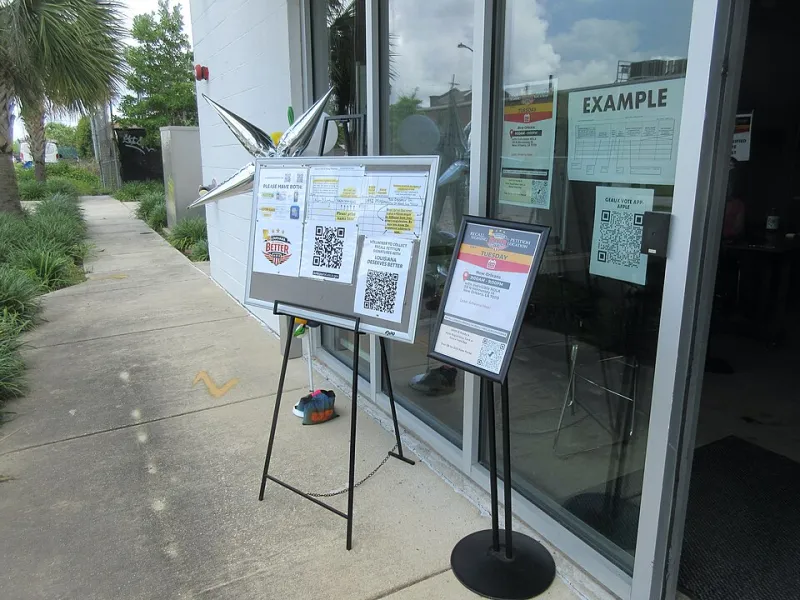
Photo: Infrogmation, CC BY-SA 4.0, via Wikimedia Commons
A Remedy Whose Time Has Returned
For most of the twentieth century, the recall election occupied a peculiar corner of American civic life — theoretically available, seldom deployed, and almost never successful at the state or local level outside of a genuine political catastrophe. That calculus is changing with remarkable speed. From California school boards to Wisconsin county executives to major-city mayors, petitions are being filed, signature thresholds are being met, and incumbents are being removed from office at a pace that political scientists are only beginning to quantify.
The question worth asking is not simply how many recalls are happening. It is why citizens who once waited patiently for the next scheduled election are now choosing the far more expensive, logistically complicated, and emotionally exhausting path of a recall campaign. The answer reveals something fundamental about the state of public trust in American governance.
The Distance Between Elections
One of the most consistent explanations offered by recall organizers — whether they are conservatives targeting a progressive city council member or liberals pursuing a Republican county sheriff — is the same: the next regular election felt too far away.
This is not merely impatience. In an era when a single policy decision can alter a community's character within months, the idea that voters must wait two, three, or even four years to express their verdict has begun to feel less like democratic patience and more like democratic helplessness. The pandemic years accelerated this dynamic considerably. Decisions about school closures, mask mandates, and business restrictions were made rapidly and with sweeping consequences, while the formal mechanisms for electoral accountability remained locked to their fixed schedules.
The recall, in this context, is less a radical act than a rational one. It is the electorate asserting that accountability should be proportionate to the speed of governance.
What the Data Actually Shows
The Ballotpedia database of recall attempts in the United States reveals a significant uptick in both the number of recall petitions filed and the rate at which those petitions are succeeding. The years between 2020 and 2024 saw more successful recall elections at the local level than any comparable period in recent decades. School board members, prosecutors, mayors, and city council representatives have all been removed through the process.
Critically, the ideological distribution of recall targets has been roughly bipartisan. The narrative that recalls are primarily a tool of the right — shaped in part by the high-profile 2021 attempt to remove California Governor Gavin Newsom — does not hold up to scrutiny at the local level. Progressive district attorneys in San Francisco and Los Angeles have been recalled by electorates frustrated with crime policy. Conservative school board members have been removed in suburban districts over curriculum disputes. The recall is, in practice, an instrument that travels across partisan lines when the underlying anger is sufficiently intense.
The Anatomy of a Successful Recall
Not all recall efforts succeed, and the ones that do tend to share several characteristics beyond simple voter anger.
First, successful recalls almost always involve a specific, tangible grievance rather than a general sense of dissatisfaction. Voters who sign a recall petition and then show up to vote in a special election are motivated by something concrete — a decision about public safety, a vote on land use, a policy affecting their children's schools. Abstract ideological opposition rarely generates the organizational energy required to clear the signature threshold.
Second, the most effective recall campaigns tend to have professional organizational backing, even when they originate from grassroots outrage. Getting enough valid signatures within a legally prescribed window requires coordination, funding, and legal expertise. The recall of San Francisco District Attorney Chesa Boudin in 2022, for example, was supported by a well-funded coalition that included prominent local business figures alongside ordinary residents. Organic anger is the fuel; organization is the engine.
Third, timing matters in ways that are easy to underestimate. Recall elections typically draw lower overall turnout than general elections, which means the composition of the voting electorate can differ substantially from the one that elected the official in the first place. A candidate who won on the strength of high turnout among younger or lower-propensity voters may face a very different electorate in a special recall election held on an off-cycle date.
A Generational Dimension
There is a generational component to the recall's resurgence that deserves more attention than it typically receives. Younger voters — particularly those in the Millennial and Gen Z cohorts — have grown up in an information environment that provides near-constant feedback loops. They are accustomed to rating services, reviewing products, and expressing preferences in real time. The idea that political accountability should operate on a four-year lag feels genuinely foreign to a generation that has never had to wait more than seconds for a response.
This is not to suggest that younger voters are driving recall efforts in every instance — the demographics vary considerably by jurisdiction and issue. But the broader cultural shift toward immediacy and responsiveness has normalized the idea that accountability mechanisms should be faster and more direct. The recall fits neatly into that expectation.
Older voters, meanwhile, are arriving at similar conclusions through a different route. Many long-term residents of communities undergoing rapid change — whether demographic, economic, or political — have concluded that the standard electoral timeline is simply inadequate to the pace of transformation they are experiencing. The recall offers a way to assert control over a situation that feels like it is moving faster than democracy can manage.
The Risks of a Sharper Instrument
None of this means the recall is without its costs and complications. Critics across the political spectrum have raised legitimate concerns about the process being weaponized for purposes that have less to do with genuine misconduct and more to do with policy disagreement or partisan maneuvering.
The California gubernatorial recall of 2021 is instructive here. The effort against Newsom was mounted largely by conservative activists who had little realistic chance of removing a sitting governor in a heavily Democratic state, yet the process consumed substantial public resources and political attention. At the local level, recall threats have been used as harassment tools against officials in smaller jurisdictions who lack the resources to mount an effective defense.
There is also the question of what a proliferating recall culture does to the willingness of qualified people to seek public office in the first place. If the implicit bargain of elected service includes the possibility of removal at virtually any point in a term based on the organizational capacity of one's opponents, the risk calculus for potential candidates changes in ways that may not favor good governance.
The Accountability Gap
At its core, the recall's revival reflects a genuine accountability gap in American political life. Voters who feel that their representatives have ceased to represent them — and who have lost confidence that formal complaints, media pressure, or standard electoral cycles will produce meaningful consequences — are reaching for the most direct tool available to them.
Whether that tool is being used wisely in every instance is a separate question. What the pattern makes unmistakably clear is that a significant portion of the American electorate no longer trusts that patience and process will be enough. That is a signal worth taking seriously, regardless of where one stands on any particular recall campaign.