One Official, One City, One Standoff: How Local Executives Are Becoming the Last Line of Resistance Against National Policy

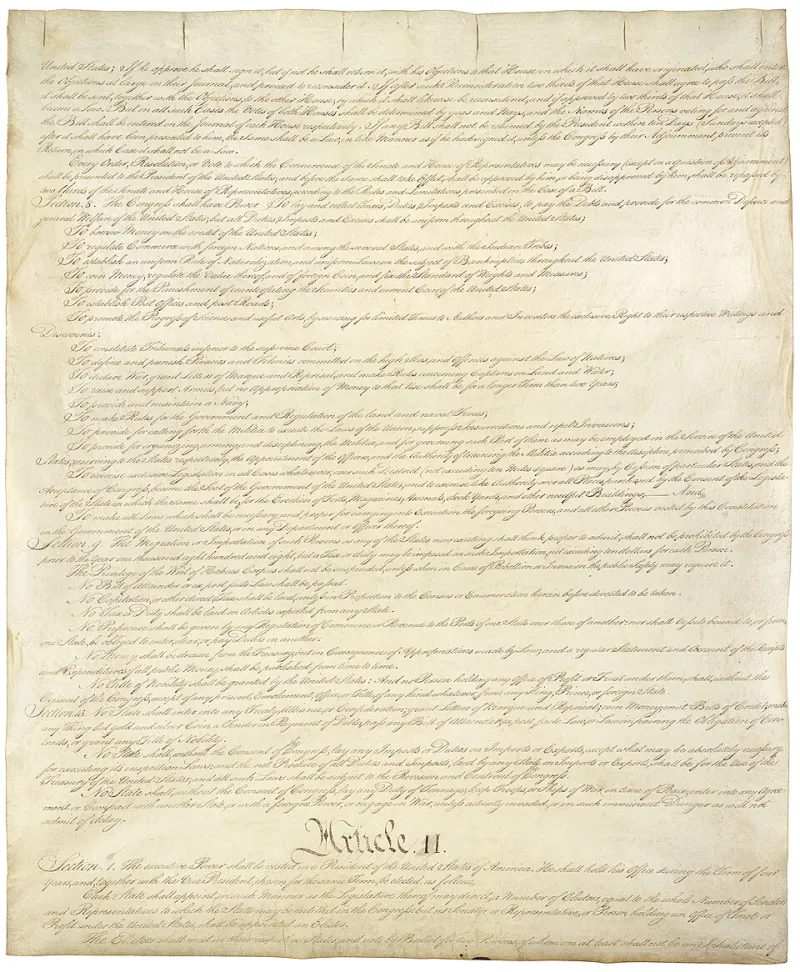
Photo: The Press Club of Salt Lake (Salt Lake City, Utah), publisher., Public domain, via Wikimedia Commons
American federalism has always operated on the assumption that power flows in multiple directions. The founders imagined a layered system — national, state, local — each level capable of checking the others in theory, if rarely in practice. What has changed in the current political moment is the degree to which that theoretical check has become an operational one. Mayors are refusing to cooperate with federal immigration agents. County commissioners are declining to implement state public health frameworks. City executives are directing municipal funds toward priorities that directly contradict the preferences of the governors who nominally oversee them.
None of this is entirely new. But the frequency, the visibility, and the national political consequences of these local standoffs have intensified in ways that demand serious attention.
The Architecture of Local Defiance
Understanding why this is happening requires a clear-eyed look at what local executive officials actually control. Mayors and county executives do not possess legislative authority in the traditional sense, but they command something arguably more consequential in the short term: discretion over enforcement. They decide how police departments allocate their time and resources. They determine which state or federal directives receive enthusiastic cooperation and which receive bureaucratic indifference. They control the municipal budget process, which means they can fund or defund the administrative infrastructure that makes compliance with outside mandates possible.
This discretionary authority has become a political instrument of the first order. When a mayor announces that local police will not be used to enforce federal immigration detainer requests, that decision does not merely affect the individuals who might otherwise be detained. It sends a signal to the federal government, to advocacy organizations, to donors, and to the national media. A single executive order from a mid-sized city can generate congressional hearings, alter the posture of federal agencies, and become a centerpiece of a national campaign advertisement.
Immigration Enforcement and the Sanctuary Standoff
No policy domain illustrates this dynamic more vividly than immigration enforcement. The designation of a city or county as a "sanctuary" jurisdiction — meaning local law enforcement will not routinely assist in federal immigration operations — has been one of the most consequential acts of local executive defiance in recent American political history.
When Chicago Mayor Lori Lightfoot declined to enter into a cooperation agreement with Immigration and Customs Enforcement during her tenure, the decision was not merely administrative. It became a flashpoint in a national argument about the boundaries of federal authority. The Trump administration responded by threatening to withhold federal grant funding, a move that itself became the subject of federal litigation. One city's policy stance had generated a constitutional confrontation that reached the appellate courts.
The pattern has repeated itself in jurisdictions large and small. A county sheriff in a mid-sized metropolitan area who publicly refuses to honor ICE detainer requests becomes, almost immediately, a national figure — celebrated in some quarters, vilified in others, and inevitably drawn into the broader political narrative that national figures are constructing. The local executive who might once have governed in relative obscurity now operates in a media environment where a single press conference can produce consequences that extend far beyond the next election cycle.
Public Health and the Limits of State Authority
The COVID-19 pandemic introduced a new generation of observers to the phenomenon of intragovernmental conflict, but it also revealed something that practitioners of state and local politics had understood for years: the gap between a state mandate and its actual implementation is almost entirely determined by local executive will.
In Texas, several county judges — who in that state carry significant executive authority at the county level — openly defied Governor Greg Abbott's prohibition on local mask mandates, issuing their own orders and daring the state to enforce its preemption. In Florida, school board members and local health officials navigated a similar confrontation with Governor Ron DeSantis's administration over pandemic protocols. In each case, the local official's decision to resist state authority was not merely an administrative dispute. It was a political act, understood as such by all parties involved, and it produced political consequences that extended well beyond the immediate public health question.
What these confrontations revealed is that state governments possess considerable formal authority over local jurisdictions but comparatively limited capacity to enforce that authority in real time. The legal mechanisms for compelling compliance — preemption statutes, funding threats, removal proceedings — are slow, cumbersome, and politically costly. A determined local executive can absorb months of legal pressure while the underlying policy dispute is litigated in the courts and in the press.
Infrastructure Spending and the Politics of Implementation
The Bipartisan Infrastructure Law, passed in 2021, created a different kind of local executive moment. Rather than defiance, it invited aggressive local initiative — and revealed that the officials best positioned to capture federal resources were those willing to invest significant political capital in the pursuit of them.
Mayors who moved quickly to establish dedicated grant-writing offices, build relationships with federal agency liaisons, and align their municipal priorities with the categories of spending the law prioritized received disproportionate early allocations. Those who lacked the administrative capacity or political will to engage with the process were left waiting. The result was a distribution of federal infrastructure investment that reflected not only objective need but executive initiative — and, in some cases, political connectivity.
This dynamic illustrates a different dimension of local executive power: not the power to resist, but the power to shape implementation in ways that serve local priorities. A mayor who successfully redirects a federal transportation grant toward a project that advances a particular neighborhood's interests — or that strengthens a particular political coalition — is exercising the same kind of consequential discretion as the mayor who refuses to cooperate with federal enforcement.
The National Stakes of Local Decisions
What ties these case studies together is the degree to which the nationalization of American politics has transformed the meaning of local executive action. A generation ago, a county commissioner's refusal to implement a state directive might have been a local story, covered by the regional press and resolved through quiet negotiation. Today, that same refusal is livestreamed, shared across social media platforms, picked up by national outlets, and incorporated into the fundraising appeals of organizations that have no geographic connection to the jurisdiction in question.
This nationalization cuts in multiple directions. It empowers local officials who might otherwise lack the leverage to resist pressure from above. A mayor who knows that her defiance will generate national attention — and the donations and endorsements that follow — has resources that a mayor operating in obscurity does not. But it also subjects local governance to pressures that have little to do with local conditions. The official who takes a stance primarily to generate national profile may be making decisions that serve her political career rather than her constituents.
The 21st-century American political system has, in effect, created a new class of local executive — one who governs locally but operates nationally, whose decisions are made with one eye on the city council chamber and another on the cable news chyron. Whether this development strengthens or weakens democratic accountability at the local level is a question that deserves more sustained attention than it has yet received. What is not in question is that the stakes of local executive decisions have never been higher — or more visible.