The Invisible Arena: Why the Real Fights for Political Power Are Happening in Rooms You've Never Heard Of
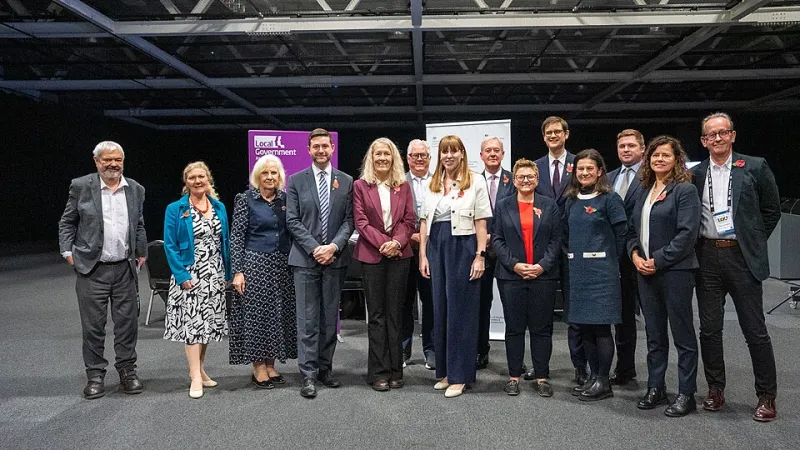
Photo: Ministry of Housing, Communities & Local Government, OGL 3, via Wikimedia Commons
Picture the standard image of American political conflict: a Senate chamber, a presidential debate stage, a cable news split-screen. These are the venues that generate coverage, commentary, and the ambient sense that something important is being decided. They are also, increasingly, a distraction.
The genuine levers of political power in 21st-century America are being pulled in far less photogenic settings. A zoning board meeting in a suburb of Columbus, Ohio. A school district budget hearing in suburban Dallas. A state administrative agency's comment period on a proposed rule change that runs 340 pages and closes in thirty days. These are the arenas where policy is actually made, where political coalitions are actually built, and where organized minorities routinely outmaneuver inattentive majorities.
This is the story that national political media, structured around the rhythms of electoral campaigns and legislative drama, has almost entirely failed to tell.
The Procedural Turn in American Politics
American governance has always involved a tension between headline-generating legislation and the quieter work of implementation and administration. What has changed over the past two decades is the degree to which organized political actors — on both the left and the right — have recognized the procedural layer as the primary battlefield, rather than a secondary one.
The reasons for this shift are structural. Congress has become less capable of passing major legislation due to polarization and the filibuster. Presidential administrations cycle every four to eight years. Federal courts have imposed new constraints on executive agency authority. In this environment, the action has migrated downward — to state legislatures, yes, but also to the administrative bodies, boards, and commissions that operate below the level of sustained media scrutiny.
What political organizers discovered, particularly after 2010, is that these bodies are simultaneously powerful and remarkably accessible to anyone willing to show up consistently. A zoning board that meets on the third Tuesday of every month, attended habitually by three developers, a neighborhood association president, and a handful of retirees, is not a fortress. It is an open door — for whoever chooses to walk through it.
How Boring Became a Strategy
The deliberate exploitation of procedural obscurity is not accidental. It is a feature, not a bug, of how sophisticated political organizations now operate. Groups across the ideological spectrum have invested in what might be called the infrastructure of the mundane: training volunteers to attend school board meetings, coaching members on how to submit public comments during regulatory review periods, and building databases of local elected positions that most voters cannot name.
On the right, organizations affiliated with the network of donors associated with the Koch political operation have spent years building capacity at the state and local level, focusing on regulatory reform, occupational licensing, and land-use policy in ways that rarely generate national headlines but shape economic conditions for millions of people. The American Legislative Exchange Council, which provides model legislation to state lawmakers, operates almost entirely below the threshold of mainstream political coverage despite having influenced legislation in nearly every state.
Progressive organizations have pursued analogous strategies. The Working Families Party has prioritized city council and county commission races in ways that, over time, reshape the ideological composition of local government. Climate advocacy groups have learned to intervene in state utility commission proceedings — technically administrative rather than legislative — where decisions about energy infrastructure are made with minimal public awareness.
The common thread is a recognition that the procedural layer of governance is where durable power is actually consolidated. Legislation can be reversed. Administrative infrastructure, once built, is far more resistant to change.
Technology Has Changed the Equation — Partially
It would be tempting to argue that digital technology has democratized access to these invisible arenas, and in some respects it has. Public comment portals allow citizens to weigh in on regulatory proposals without attending a physical meeting. Local government agendas are increasingly posted online. Watchdog organizations use automated tools to track legislative activity across all fifty states simultaneously.
But technology has also amplified the advantages of organized actors over diffuse publics. A well-funded advocacy organization can deploy software to generate thousands of public comments in a regulatory proceeding, creating the appearance of broad grassroots support for a position that may, in fact, reflect a narrow interest. Agencies have become increasingly sophisticated at distinguishing coordinated comment campaigns from genuine public input, but the arms race continues.
More fundamentally, the information asymmetry problem has not been solved by digitization. Knowing that a city planning commission meeting is happening and understanding what the agenda items actually mean are two different things. The procedural vocabulary of American local governance — variances, special use permits, environmental impact reviews, TIF districts — is not intuitive. It rewards those who have already invested in learning it, which tends to mean organized interests with professional staff rather than ordinary residents.
What National Media Keeps Getting Wrong
The structural incentives of national political journalism push relentlessly toward the dramatic and the nationally legible. A contested Senate primary generates far more traffic than a story about a state public utilities commission ruling on net metering policy. A presidential press conference is more shareable than an investigation into how a county government's purchasing decisions shaped its political donor landscape.
This is not a moral failing of journalists. It is a rational response to audience behavior and economic incentives. But the cumulative effect is a significant gap between what political media covers and where political power actually resides.
The communities and organizations that have figured this out — that have invested in showing up to the boring meetings, in understanding the procedural rules, in building relationships with the appointed officials who run the administrative machinery of American governance — have a structural advantage over those who have not. This is true regardless of ideological orientation. The procedural arena rewards organization, persistence, and technical knowledge. It does not particularly reward passion, rhetoric, or social media presence.
Closing the Attention Gap
For citizens who want to engage with politics at the level where it actually operates, the implication is uncomfortable but clarifying: the most impactful political act available in most American communities is almost certainly not posting, donating to a presidential campaign, or attending a rally. It is showing up to a local government meeting, consistently, and learning enough about the procedural rules to participate effectively.
For journalists and media organizations, the challenge is to develop coverage models that make local governance legible and engaging without sacrificing accuracy or depth. Some outlets — local news organizations, state-level policy publications, and a growing number of nonprofit newsrooms — are attempting this work. They deserve more attention and more resources than they currently receive.
The political battles that will define American life over the next decade are already underway. Many of them are happening in rooms without cameras, at meetings without crowds, through processes without names that most voters would recognize. That is precisely why they matter.